

The object of religion is to teach men how to rid themselves of selfishness, how to cultivate the sense of justice and how to sacrifice one’s own interests and even one’s own life to attain the goal of loving others and helping them.

The object of religion is to teach men how to rid themselves of selfishness, how to cultivate the sense of justice and how to sacrifice one’s own interests and even one’s own life to attain the goal of loving others and helping them.
Lifu Chen

The Goal of Loving Others
Topic: Serving Others
The object of religion is to teach men how to rid themselves of selfishness, how to cultivate the sense of justice and how to sacrifice one’s own interests and even one’s own life to attain the goal of loving others and helping them… Instruction in benevolence must start with the love of one’s family and relatives, and progress to kindness (benevolence) to other persons, and finally extend to kindness toward all other living things. The first objective [of life] is the ‘completion of self,’ or, the building of oneself into a man of perfect personality. The second objective is ‘the completion of things,’ which is the extension of the perfect personality to his common existence with others, and includes the increase of human well-being, the regulation of the family, proper government of the State, and world peace.
Chen Lifu (born August 21, 1900, in Wuxing, Zhejiang—modern-day Huzhou—China; died February 8, 2001, in Taichung, Taiwan) was a major political figure, educator, and organizer in 20th-century Chinese history. Born into an influential family—his uncle, Chen Qimei, was a key revolutionary ally of Sun Yat-sen, and his elder brother, Chen Guofu, also became a political leader—Chen grew up surrounded by the ideas and networks shaping China’s early republican era. After studying engineering at Beiyang University, he continued his education in the United States, earning a master’s degree in mining engineering from the University of Pittsburgh in the mid-1920s.
Upon returning to China, Chen became deeply involved in the Kuomintang (Nationalist Party). With his brother, he formed the influential “CC Clique,” a powerful faction that dominated party organization, personnel decisions, and internal discipline. His most significant public office was Minister of Education during the Second Sino-Japanese War (1938–1944), when he worked to preserve and relocate universities under wartime conditions, expand educational access for students from impoverished regions, and stabilize a fragmented national school system. After the war, he served as Vice President of the Legislative Yuan, contributing to the Nationalist government’s legislative and institutional development.
Following the Nationalist retreat to Taiwan after the Chinese Civil War, Chen spent several years in the United States before returning to Taiwan in 1968. In his later life, he devoted himself to cultural, educational, and medical initiatives, serving as Chairman of China Medical University and supporting the study of Chinese culture, Confucian scholarship, and traditional Chinese medicine. Living to the age of one hundred, Chen Lifu left a complex legacy—honored for his organizational talent, educational reforms, and commitment to cultural preservation, yet also associated with the intense factional politics and ideological struggles that marked China’s turbulent modern era.
The Confucian Way
Chen, Lifu. The Confucian Way: A New and Systematic Study of "The Four Books," trans. Shi Shun Lin. KPI, 1987] p. 584.
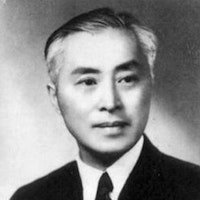
Lifu Chen
About This Lifu Chen Quotation [Commentary]
Lifu Chen’s quotation delves deeply into the core tenets of religion, suggesting its ultimate goal is to guide individuals toward self-transcendence for the betterment of others. Chen posits that the essence of religious teachings is the eradication of selfishness and the cultivation of justice and altruism. This perspective aligns with many spiritual and ethical systems, where the focus is not merely on personal salvation or enlightenment but on the broader impact of one’s actions and attitudes on the community and the world. By emphasizing the need to sacrifice personal interests and even one’s life, Chen speaks to a profound commitment to love and assist others, presenting this as the pinnacle of religious and moral achievement.
Expanding on this idea, Chen describes a pathway of benevolence that begins within the family and gradually extends outward to encompass all living beings. This hierarchical approach to kindness mirrors many traditional teachings, such as those found in Confucianism, where the cultivation of personal virtue is seen as the foundation for broader social harmony and peace. The concept of ‘completion of self’ is particularly significant, suggesting that true personal development involves not just self-improvement in isolation but also contributing positively to the lives of others. The ‘completion of things’ extends this notion to the societal level, advocating for a world where personal virtues are mirrored in social structures, leading to a more harmonious and peaceful world.
In the broader context of serving, Chen’s thoughts resonate powerfully. His emphasis on moving beyond self-interest to a life dedicated to helping others reflects a deep understanding of service as an integral part of human existence. The progression from self-love to universal benevolence outlined by Chen is a roadmap for anyone seeking to live a life of service. This journey of expanding one’s circle of concern, from the personal to the universal, embodies the essence of true service – not just as an action but as a way of being. In aligning personal development with the welfare of others and society, Chen’s philosophy offers a profound insight into how service can be a natural extension of personal growth and spiritual maturity.
Lifu Chen, The Confucian Way
The Confucian ethical ideals, like those of the Bible, emphasize benevolence, compassion, and love… Speech, too, should be ordered by purposefulness, truthfulness, sincerity, and honesty.
—Mose Durst, Ph. D. [Unification Culture and the 21st Century] p. 44.
Speech must be truthful and practicable
“Speech must be truthful and practicable. It should not be excessive; indeed it is sufficient if it conveys the meaning, for it can produce its effect only where its time, weight, and objects are just right.”
—Lifu Chen [The Confucian Way: A New and Systematic Study of the Four Books].
Related Quotes
Copyright © 2017 – 2025 LuminaryQuotes.com About Us